You finished your chemistry unit, felt like you understood it, took the end-of-chapter test in the textbook, and did fine. A week later, the same topic comes up in a practice paper and you blank.
This happens to almost every IGCSE and A-Level student at some point. And the reason isn't that you're bad at chemistry. It's that the way you tested yourself didn't actually replicate what an exam demands.
This article is about how to fix that specifically, how to use mock tests, unlimited practice questions, and a structured mistake review system to build the kind of exam readiness that doesn't fall apart under pressure.
Why Most "Practice" Doesn't Actually Prepare You
There's practice that feels productive and practice that actually builds exam performance. They look similar from the outside but produce very different results.
Reading worked examples: feels productive, but you're borrowing someone else's thinking. Doing 10 questions from the same chapter, in order, with the textbook open: you already know the context, so there's less genuine retrieval happening. Marking your own answers leniently: comfortable, but hides the gaps.
Real exam preparation looks like this: timed, unprompted, mixed topics, instant honest marking. In other words what an actual exam looks like.
The closer your practice conditions are to real exam conditions, the better your performance transfers when it counts. This principle is called specificity of practice in learning science, and it explains why students who do lots of past papers consistently outperform students who only read notes, even when total study hours are equal.
The issue for most students is that getting access to enough good practice material organised by topic, matched to the right syllabus, with quality answers is genuinely difficult. Past papers from Cambridge exist, but they run out. Textbooks run out. The textbook exercises aren't always exam-style. And getting feedback on your answers usually means waiting for a teacher.
Leminno's practice bank was built specifically to remove those constraints.
What Unlimited Practice Actually Means
When we say unlimited practice, we mean it literally. There's no "you've used your three free attempts" or "download the premium pack for more questions." You can sit down and do 50 MCQs on IGCSE Biology Cell Structure at 11pm, finish them, and immediately start another set if you want.
More importantly, the questions don't just repeat. The practice bank rotates topics, adjusts difficulty based on your performance, and mixes question types definition recall, application, analysis so you're not just memorising the pattern of the exercise set.
This matters enormously for a two-year syllabus like IGCSE or A-Level. You learn Cell Biology in Year 10 and then, eighteen months later, an A-Level Biology paper tests it again but with a novel application angle. If your only revision tool was a fixed set of 20 textbook questions, you've memorised those questions. What you need is exposure to different framings of the same concept and that only happens when the question pool doesn't run dry.
Here's what a typical practice session on Leminno looks like:
- Choose your subject and topic (or choose "mixed" for interleaved practice across topics)
- Answer questions with a timer running exam conditions by default
- After each answer, see whether you were right, and read the explanation regardless
- Wrong answers are logged automatically to your mistake tracker
- At the end of a session, see your score, accuracy by topic, and suggested areas to revisit
That's it. No setup, no printing, no marking. Just practice → feedback → repeat.
Mock Exams: Why They're Different From Practice Questions
Practice questions and mock exams serve different purposes, and confusing them is a common revision mistake.
Practice questions build the building blocks definitions, concepts, calculations, short applications. They're designed to be targeted. You do 15 questions on equilibrium and you know whether equilibrium is solid or shaky.
Mock exams stress-test the whole structure under realistic conditions. A timed, full-length paper makes you manage time across an entire sitting, move past a question you're stuck on instead of staring at it, and maintain focus for 90 minutes or more. These are skills that don't come automatically they need to be practised too.
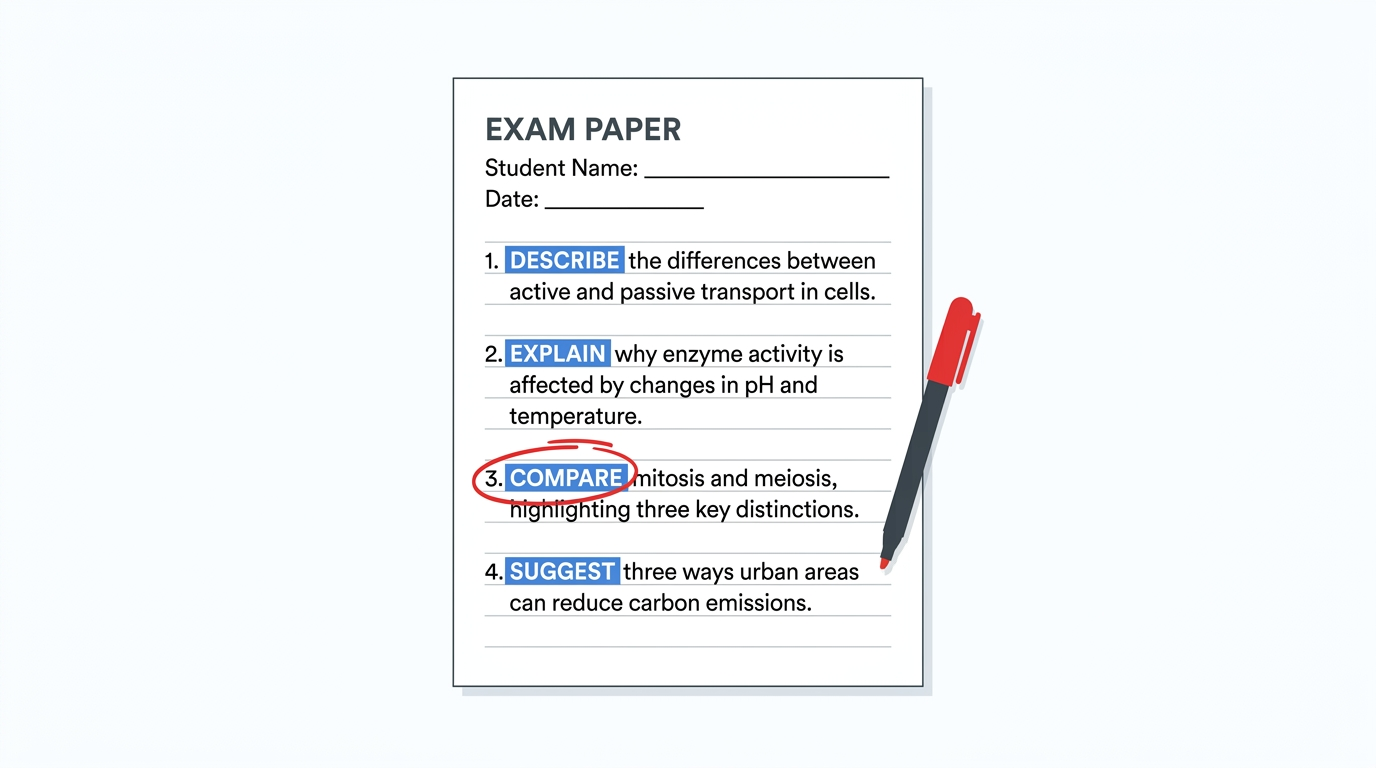
Cambridge IGCSE and A-Level papers are particularly structured: command words, mark allocations, question types that follow predictable patterns. The more papers you've done under timed conditions, the better you get at reading those patterns quickly, knowing how much to write for a 4-mark question, and not over-explaining a 1-mark definition.
Leminno's mock exams replicate this. Full-length, timed, syllabus-mapped papers that look and feel like the real thing. When you finish, you don't just get a score you get a breakdown: which questions you lost marks on, how your score compares to what you've been achieving in topic practice, and which gaps the mock exposed that your practice sessions hadn't caught.
That gap-detection function is probably the most valuable thing a mock exam can do. It's easy to feel like you know a subject after practising topic by topic. A timed mock, with questions coming in random order and no warning about what's next, usually shows you something different.
The Mistake Review System: Where the Real Learning Happens
Here's a pattern I've seen over and over: a student takes a mock, gets their score, feels bad about the wrong answers, and then moves on to the next topic without ever properly revisiting what went wrong.
This is one of the most common and most costly revision mistakes there is.
Every wrong answer is a piece of intelligence about your understanding. It tells you exactly which concept you haven't internalised, which misconception you're carrying, or which type of question catches you out. Ignoring that information and moving on means you're almost certain to get a similar question wrong in the real exam.
Leminno's mistake tracker makes sure that doesn't happen.
Every question you get wrong is automatically logged, tagged by topic, and added to your review queue. The next time you sit down to study, the platform surfaces those flagged items not as a punishment, but as targeted revision material. You see your mistake, you see the correct answer and explanation, you attempt similar questions, and the tracker updates when you demonstrate that you've actually understood the fix.
Over time, the mistake tracker becomes a precision map of your weak spots. Not "I'm bad at Chemistry" (useless) but "I consistently confuse Le Chatelier's Principle with collision theory when applied to pressure changes" (fixable, specific, actionable).
This is what a good private tutor would do if they had perfect records of every question you'd ever attempted. The platform does it automatically, at scale, for free.
Using the Mistake Review Log Strategically
A few things that make the mistake review log more powerful:
Review within 24 hours of the mistake. Cognitive science is clear on this the sooner you address an error after making it, the easier it is to replace the wrong mental model with the right one. Don't batch all your mistake reviewing to Sunday.
Don't just re-read the answer. Close the explanation, wait 30 seconds, and try to explain it back in your own words. If you can do that, you've learned it. If you're just reading and nodding, you haven't.
Look for patterns, not individual mistakes. If you've got 15 mistakes logged and 8 of them involve chemistry stoichiometry, that's not bad luck that's a gap. Spend a dedicated session on that topic specifically, not the others.
Re-test after reviewing. The mistake tracker is most powerful when it loops back: wrong → reviewed → re-tested. A question you got wrong should be answered correctly on a later attempt before you consider it closed.
A 6-Week Practice Plan That Actually Works
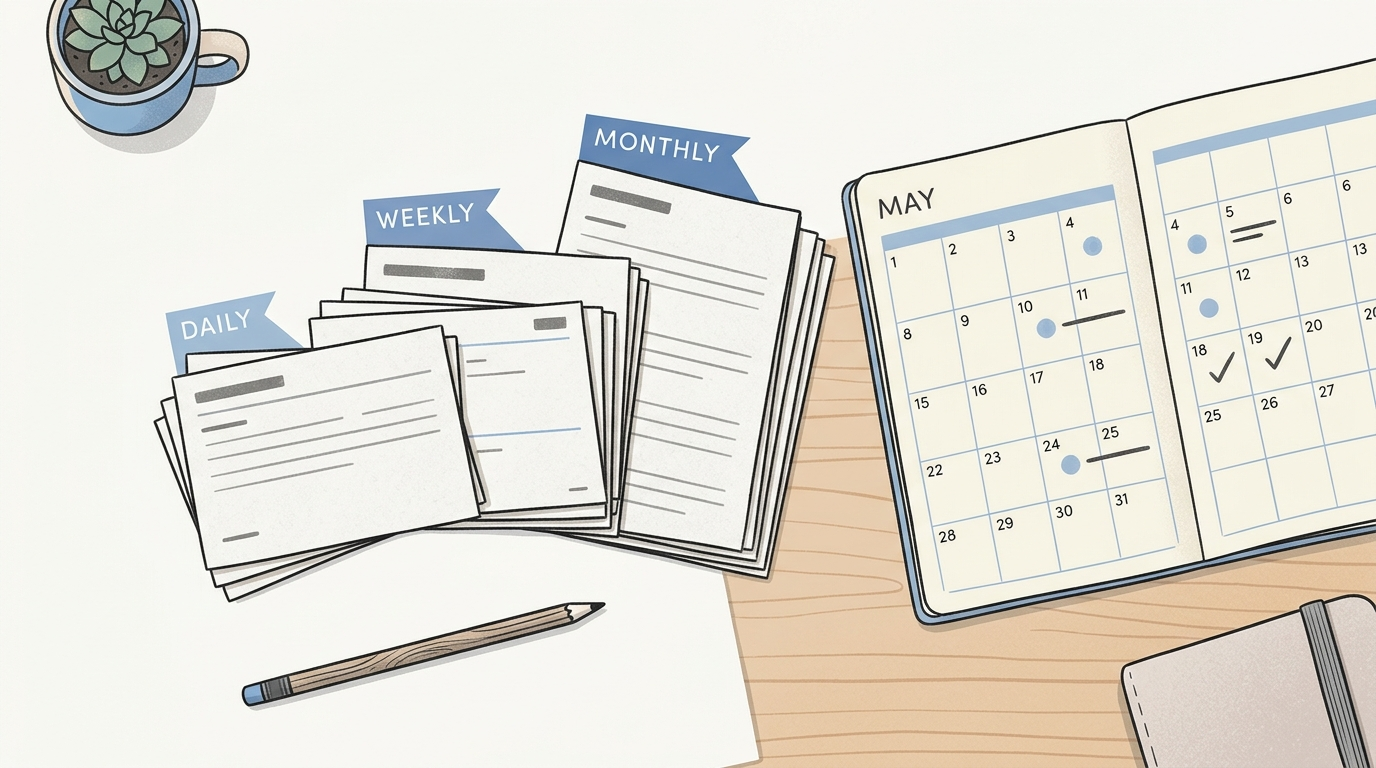
Here's a concrete schedule that uses all three elements practice questions, mock exams, and mistake review together:
| Week | Focus | Daily Activity |
|---|---|---|
| 1–2 | Topic building | 30 min practice questions per subject, topic by topic |
| 3 | Mixed practice | 40 min mixed-topic sessions, mistake review daily |
| 4 | First mock exam | Full timed mock, then 2 days of mistake review |
| 5 | Targeted drilling | Mistake-tracker driven sessions only work the flagged topics |
| 6 | Final mock + consolidation | Second full mock, review flagged mistakes, no new topics |
The key principle here: mock exams and mistake review work together. A mock without review is just a score. Review without a mock is just theory. Together, they create a feedback loop that progressively closes your gaps.
What the Data Says About Students Who Practice More
Research consistently shows that retrieval practice answering questions from memory rather than re-reading is the single most effective revision technique available to students. A landmark study from Washington University found that students who used test-based practice significantly outperformed those who studied passively, even when total study time was identical.
The mechanism is well understood: every successful retrieval strengthens the memory trace. Every failed retrieval, followed by correction and feedback, rewires the misconception. The more question-and-feedback cycles you complete, the more durable and accurate your knowledge becomes.
What this means practically: the student who does 200 practice questions and reviews every mistake will almost always outperform the student who reads for 200 hours even if the reading-only student "knows the content better" walking in.
Knowing it passively and producing it under exam conditions are two different things. Leminno's practice system builds the second.
Start Your First Session Today
Pick a subject you've been avoiding the one that makes you a bit anxious when you think about the upcoming exam. Go to Leminno's practice bank, select that topic, and do 20 questions without looking anything up.
Pay attention to how it feels. Pay attention to what the mistake tracker surfaces.
That's one practice session. That's also more useful revision than a two-hour reading session where you felt in control the whole time.
See the difference? Good. Now keep going.
Explore Leminno's full curriculum list for Cambridge IGCSE, A Levels, SAT, and more. Start practising free →